By Marianne Dhenin
This article was originally published by Truthout
New York’s comptroller invested over $100 million in Israel Bonds since 2023. A movement is building to stop this.
A New York campaign is angling to be the next to notch a win in a nationwide struggle for divestment from bonds that fund Israel and its attacks on Palestinians. Break the Bonds New York State is part of a nationwide initiative launched by Jewish Voice for Peace (JVP), which seeds and supports local efforts to demand divestment from Israel Bonds. The initiative launched in 2024, when news of Israel’s genocide was impossible to ignore, and a growing number of Americans were looking for ways to throw sand in the gears.
“We’ve seen, as a result of grassroots campaigning and the persistence of local organizers, a series of victories everywhere from Michigan to Maryland [and] Minnesota, where state treasurers, local treasurers, et cetera, have made the decision to not reinvest in Israel bonds,” Dani Noble, senior campaigns organizer at JVP and member leader of JVP-Philadelphia, told Truthout. Noble helps coordinate the nationwide network of Break the Bonds campaigns, which currently includes the New York campaign and 14 others. Break the Bonds New York State itself is a coalition of organizations, including JVP and Democratic Socialists of America (DSA) chapters, as well as Palestine solidarity and civil rights groups from across the state.
The municipal and state investments targeted in Break the Bonds campaigns account for some of the more than $1.6 billion in Israel Bonds held by state governments, municipal governments, and public pension funds nationwide. The Development Corporation for Israel sells those bonds to raise foreign funds for the Israeli treasury. Bondholders maintain no oversight of how their funds are used once invested. Dayna Locitzer, an organizer with JVP-Hudson Valley and Break the Bonds New York State, told Truthout the bonds are essentially “blank checks to the Israeli government.”
“Apartheid is expensive, occupation is expensive, genocide is expensive, and military activity is expensive,” Locitzer said. “So, we know that the budget of the Israeli government is largely allocated for military operations, and part of military operation is the intense oppression of the Palestinian people and the denial of their sovereignty.”
But Break the Bonds organizers also point out that it’s not just the connection to Israel’s military that makes Israel Bonds problematic. Since Israel invaded Gaza in October 2023, the Big Three credit rating agencies have downgraded the country’s rating and warned of a negative outlook for its growth, public finances, and ballooning debt — signs that investments in Israel Bonds are higher-risk. Moody’s reaffirmed this July that Israel’s rating remains the worst it has ever been, at Baa1, a level it first sank to in September 2024. Organizers question whether officials who continue to use public funds to purchase such poorly rated investments could be violating their fiduciary duties. They also argue that funds could be better invested at home in instruments such as municipal bonds or affordable housing mortgage bonds.
“These investments are unethical, they are potentially illegal, and they are financially irresponsible,” Noble told Truthout. “And our treasurers and our financial officers that are stewards of public funds should be listening to our communities when we say, ‘Put our communities first instead of using public funds to signal support for the Israeli military.’”
Break the Bonds New York State is targeting the New York State Common Retirement Fund. That fund holds over $360 million in Israel Bonds, making it one of the top U.S. investors in the bonds. It provides benefits to the more than 1.2 million members of the state retirement system, including workers retired from local schools, fire departments, public libraries, and more.
“We have people in our campaign who are pensioners, and they are outraged,” Lisa Mulleneaux, an organizer with JVP Hudson Valley and Break the Bonds New York State, told Truthout. “[It’s] not just that their money’s being invested in this way, but that they don’t know how it’s being invested — that lack of transparency.”
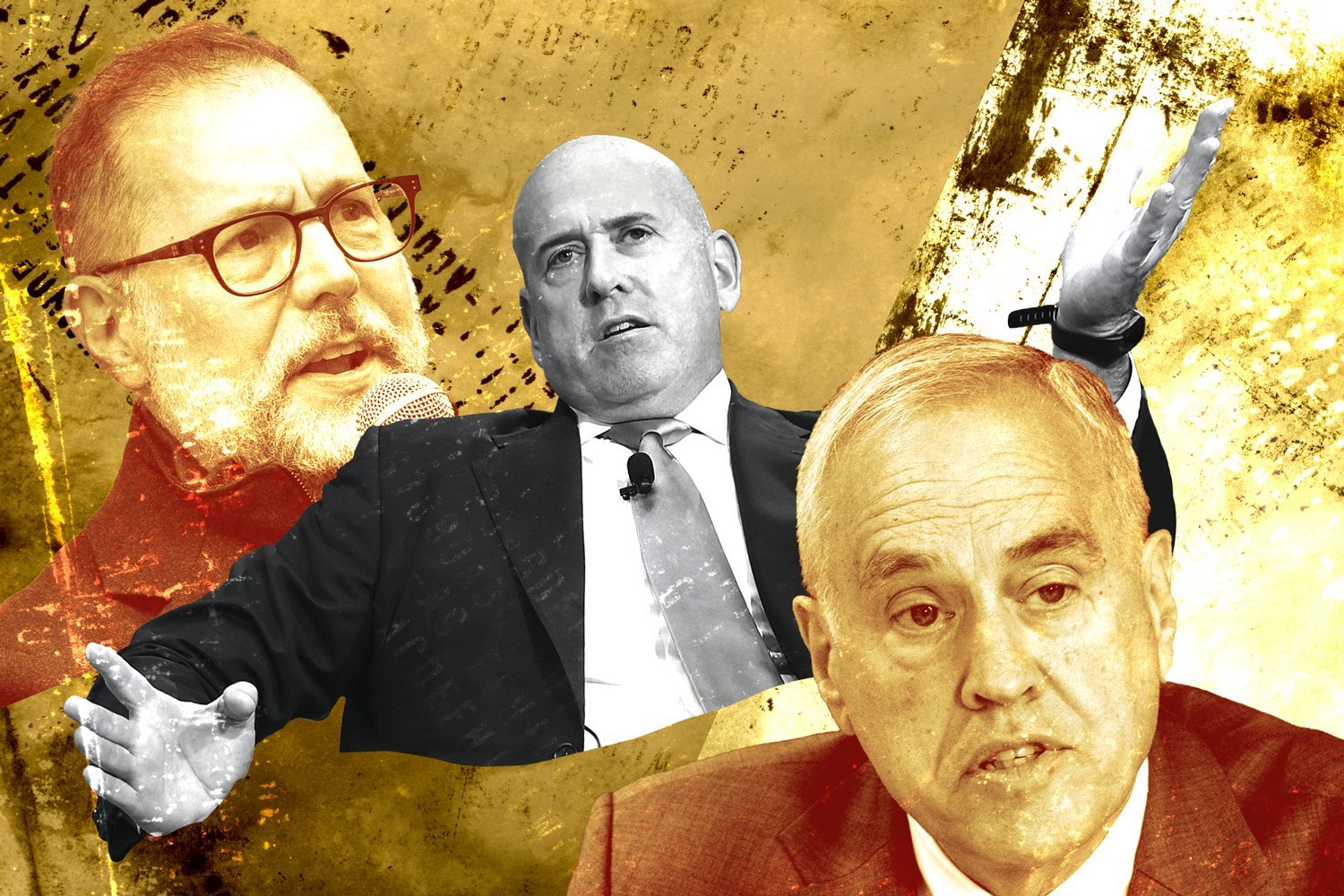
New York’s retirement fund has become one of the largest U.S. investors in Israel Bonds in no small part thanks to the current state comptroller, Thomas P. DiNapoli. As the administrative head of the state retirement system and sole trustee of the retirement fund, DiNapoli has sweeping power over investment decisions. Break the Bonds New York State organizers argue that he has wielded that power to express political support for Israel. Particularly since October 2023, Locitzer told Truthout, “it became very clear that his investment in Israel Bonds was politically motivated rather than necessarily motivated by the interests of New Yorkers.”
DiNapoli participated in a wave of investment in Israel Bonds in the days following the October 7 attacks, purchasing $20 million in Israel Bonds for the state retirement fund. In a press release announcing the purchase, DiNapoli said he felt “heartened that so many other public funds have stepped forward to purchase bonds and support Israel.”
He has continued to increase the fund’s holdings in Israel Bonds since then, even as credit rating agencies downgraded Israel. When DiNapoli was a guest speaker at a briefing hosted by the Development Corporation for Israel in April 2024, he boasted that he had invested over $100 million of state pension funds in Israel Bonds in the six months since October 7, 2023. Break the Bonds New York State organizers estimate, based on releases from DiNapoli’s office, that the comptroller has purchased over $145 million in Israel Bonds since that October alone.
Organizers have also raised questions about DiNapoli’s seemingly close relationship with the Development Corporation for Israel and the Jewish Community Relations Council, which sponsored a February 2024 trip he took to Israel. The Jewish Community Relations Council received at least $10,000 from the Development Corporation for Israel, calling itself Israel Bonds, in 2024, according to the organization’s website.
An itinerary of DiNapoli’s so-called “Israel Solidarity Mission” in February 2024, which Break the Bonds New York State organizers obtained in a public records request, shows that he was slated to meet with a Development Corporation for Israel board member during the four-day trip. Additional public records also revealed that the New York State Commission on Public Ethics and Lobbying in Government (COELIG) had raised concerns that the sponsored trip could create an impression of improper influence, though it ultimately approved the Jewish Community Relations Council’s reimbursement.
Mulleneaux said she has filed complaints with the ethics commission over DiNapoli’s connections to these groups, arguing that his actions violate his ethical obligations and undermine public trust. A Break the Bonds New York State organizer also testified about the issue at COELIG’s annual public hearing in September 2025. “This [is] an incredibly close relationship,” Mulleneaux told Truthout. “The comptroller, who is the sole arbiter of how the pension funds get invested, is basically in bed with the [Development Corporation for Israel], the sales organization, and with the organization [the Jewish Community Relations Council] that has paid for his trips to Israel.”
DiNapoli’s penchant for Israel Bonds became an issue during this year’s primary election, in which he faced two challengers who both pledged to stop buying Israel Bonds if elected. Organizers hosted an online comptroller candidate forum in June, where DiNapoli’s challengers shared their positions. Mie Inouye, an organizer with Mid-Hudson Valley DSA and Break the Bonds New York State who moderated the forum, told Truthout that DiNapoli was invited but did not attend or respond to invitations.
“The fact that he declined to participate in and of itself was significant,” Inouye said. “We know that nationally, a majority of Democrats are opposed to these investments and [DiNapoli’s] unilateral approach to investments in Israel Bonds and refusal to listen to constituents’ objections is undemocratic and against the interests of the working-class people he represents.”
Recent polling has shown that nearly three-quarters of Democratic voters oppose military aid to Israel. Similar polling specific to the question of Israel Bonds does not exist, but knowledge of the issue seems to be growing in the U.S.
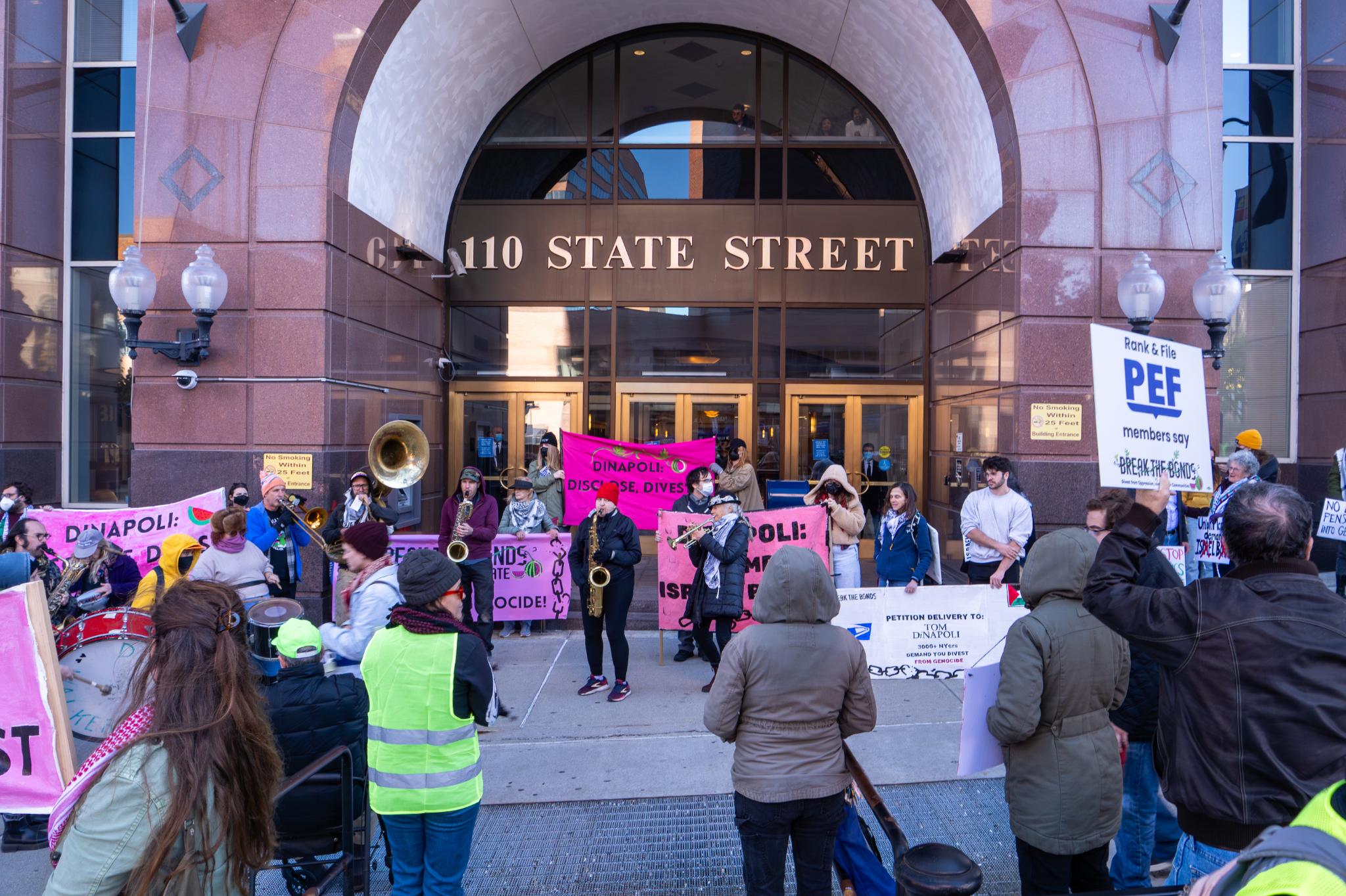
DiNapoli won the primary, but he will continue to face mounting pressure as he enters his next term if he is reelected in November over a Republican challenger. Already, last October, Break the Bonds New York State activists marched to his Albany office to deliver more than 3,400 petition signatures asking him to stop investing in Israel Bonds. Also in October, the Common Council of the City of Hudson became the first city in the state to pass a resolution calling for the same. Then, in January, Democracy for the Arab World Now issued a cease and desist letter arguing that investments in Israel Bonds violate “international and domestic legal obligations and expose citizens to unnecessary legal, financial and reputational harms.”
Break the Bonds New York State organizers are committed to continuing their outreach and organizing with public sector workers until the state comptroller’s office commits to no longer purchasing Israel Bonds. They told Truthout it feels like the tide is turning. “People want to know how public funds are being invested and allocated,” Inouye said, “and I think people really want to understand what we can do as Americans to divest ourselves from this genocide.”
This article was originally published by Truthout and is licensed under Creative Commons (CC BY-NC-ND 4.0). Please maintain all links and credits in accordance with our republishing guidelines.